

In practice, heavy metal pollution cases often involve long-term emissions from multiple sources, with pollutants migrating, transforming, and accumulating across various environmental media. Additionally, historical legacy issues frequently exacerbate the problem. While a specific company’s one-time discharge may have been fully compliant with emission standards at the time, heavy metals can continue to build up over time in certain environments—such as soil, riverbed sediments, or downstream areas of tailings ponds—or even accumulate within plants and animals. Moreover, these contaminants may undergo complex physicochemical and biological reactions, eventually surpassing critical thresholds and triggering ecological disasters. For instance, wastewater discharged by a company that meets regulatory standards could still lead to超标 (exceeding limits) under specific hydrological conditions due to synergistic effects with heavy metals from other sources. Similarly, when numerous enterprises in a watershed continuously release pollutants over extended periods, these contaminants become intricately mixed, transported, and transformed across water bodies and sediments—making it nearly impossible to pinpoint a single responsible party through environmental analysis alone.
Challenges in Determining Liability and Applying Evidence in Environmental Cases Involving Heavy-Metal Contamination
(1) Difficulty in Identifying Responsible Parties and Establishing Causal Links
In practice, heavy metal pollution cases often involve long-term emissions from multiple sources, with pollutants migrating, transforming, and accumulating through environmental media. Additionally, historical legacy issues frequently compound the problem. While a specific company’s one-time discharge might have been fully compliant with emission standards at the time, heavy metals can continue to build up over time in certain environments—such as soil, riverbed sediments, or downstream areas of tailings ponds—or even accumulate within plants and animals. Moreover, these contaminants may undergo complex physicochemical and biological reactions, eventually surpassing critical thresholds and triggering ecological disasters. For instance, wastewater discharged by a company that meets regulatory standards could still lead to超标 (exceeding limits) under specific hydrological conditions due to synergistic effects with heavy metals from other sources. Similarly, when numerous enterprises in a watershed continuously release pollutants over extended periods, these contaminants become intricately mixed, transported, and transformed across water bodies and sediments—making it nearly impossible to pinpoint a single responsible party through environmental analysis alone.
In response, civil law and environmental law have established a special mechanism known as "environmental joint liability without fault," where multiple parties may be held liable for environmental harm regardless of whether they acted negligently. Some scholars classify the causal relationships in such cases into four distinct forms: joint causation, concurrent causation, cumulative causation, and alternative causation. 1 Article 1231 of the Civil Code and the 2023 "Interpretation by the Supreme People's Court on Several Issues Concerning the Application of Law in Adjudicating Cases Involving Tort Liability for Ecological and Environmental Damage" further clarify and refine this form of liability, separately defining joint and several liability based on proportionate shares and joint and several liability without such proportions.
Due to the varying standards of proof across different legal procedures, the provisions in specialized laws such as civil law and environmental law—regarding the determination of causal relationships and liability attribution in cases of joint torts—cannot be directly applied to criminal justice. In criminal cases involving heavy-metal pollution, particularly when a "multiple causes, single effect" scenario arises, criminal justice authorities often rely on subjective evidence such as expert appraisal reports, opinion statements, and inspection reports to assess the causal link between the criminal act and the resulting harm.
(II) Reliability of the test report is in question
Handling environmental cases heavily relies on evidence such as monitoring reports, inspection reports, assessment opinions, and expert appraisals. However, due to the complex nature of heavy-metal contamination and the fluidity of environmental media, the representativeness of samples collected by law enforcement and judicial authorities, the reliability of monitoring results, and the evidential weight of appraisal reports often come under scrutiny. Moreover, samples are prone to secondary contamination during sampling, storage, and transportation—issues exacerbated by factors like sampling containers, preservation conditions, and transit practices. Additionally, sample sites often exhibit extreme spatial variability, meaning that the placement of sampling points, depth of collection, and mixing methods can significantly influence the final test outcomes. A single, accidental test result that fails to meet standards—and thus doesn’t reflect the overall situation—could lead to misleading conclusions. Conversely, given that pollutant concentrations fluctuate dramatically based on hydrological, meteorological, and production-cycle factors, passing a single or a few tests does not necessarily rule out long-term, hidden instances of excessive emissions or cumulative effects over time.
(III) Improper application of the conversion of criminal and administrative evidence can hinder fair administration of justice.
As typical examples of transferred cases, criminal justice authorities often rely on evidence materials generated during administrative law enforcement when handling environmental crime cases—and the scope of administrative enforcement evidence that can be converted into criminal litigation evidence is even broader. Article 54, Paragraph 2 of China’s Criminal Procedure Law explicitly states: "Physical evidence, documentary evidence, audio-visual materials, electronic data, and other evidence collected by administrative agencies during administrative enforcement and case investigations may be used as evidence in criminal proceedings." Meanwhile, Article 20 of the "Measures for Coordinating Environmental Protection Administrative Enforcement with Criminal Justice" further clarifies: "Evidence materials—including physical evidence, documentary evidence, audio-visual materials, electronic data, monitoring reports, inspection reports, identification opinions, expert opinions, site inspection records, and inspection records—collected and prepared lawfully by environmental protection departments during administrative enforcement and case investigations may also be used as evidence in criminal proceedings." Additionally, Article 14 of the "Interpretation by the Supreme People's Court and the Supreme People's Procuratorate on Several Issues Concerning the Application of Law in Handling Criminal Cases of Environmental Pollution" stipulates: "Monitoring data gathered by environmental protection authorities and their affiliated monitoring institutions during administrative enforcement processes may be admitted as evidence in criminal proceedings." Thus, it is evident that in environmental crime cases, the range of administrative enforcement evidence that criminal justice authorities can accept and utilize has significantly expanded—encompassing not only objective evidence types like physical evidence, documentary evidence, audio-visual materials, and electronic data, but also a wide array of subjective evidence, such as inspection reports, identification opinions, expert opinions, site inspection records, and inspection records.
In fact, this broad application of converting administrative evidence into criminal evidence can easily lead to the mechanical and procedural use of administrative case evidence by criminal justice authorities. In administrative regulatory cases, when agencies issue penalty decisions, they typically rely on clear and compelling evidentiary standards—such as on-site inspection reports, monitoring data, company records, and "instantaneous exceedance" readings generated by automated detection systems or manual sampling. However, China’s criminal procedure requires a higher standard of proof: evidence must eliminate reasonable doubt, demanding solid confirmation of all elements constituting a crime—particularly the subjective culpability (intentional wrongdoing or gross negligence) and the direct, exclusive causal link between the defendant’s actions and the severe harm caused (e.g., personal injury, death, or substantial loss of public or private property). Rigidly applying administrative evidence to criminal cases not only risks significantly amplifying suspicion against the accused but also undermines the neutrality of judicial authorities and diminishes the judiciary’s critical role in environmental governance.
Two
Several Tips for Lawyers Handling Environmental Cases Involving Heavy Metal Pollution
(1) Actively facilitate the handling of cases with leniency, using ecological damage remediation as an opportunity.
The ultimate goal of environmental justice is to safeguard a healthy ecological environment and foster harmonious coexistence between humans and nature. In cases involving heavy-metal pollution, identifying the party responsible for environmental damage and establishing a clear causal link can often be challenging. Moreover, restoring and rehabilitating damaged ecosystems typically involves significant costs and advanced technical expertise. In such scenarios, lawyers handling these cases can facilitate agreements or consensus-building between the involved enterprises and judicial or administrative authorities, encouraging proactive efforts by companies to repair and restore the compromised environment. This approach not only helps mitigate environmental harm but also supports businesses in maintaining their operational sustainability, potentially leading to lighter penalties or even pre-trial diversion programs. Specifically, in heavy-metal pollution cases where multiple factors contribute to a single outcome—or when dealing with historically unresolved issues—lawyers can first advise companies to address environmental risks within their own management domains, preventing further damage from escalating. Building on this, lawyers can assist firms in pinpointing the exact sources of environmental harm and determining appropriate forms of liability. They can then actively engage with judicial bodies and regulatory agencies, presenting a comprehensive case that highlights the company’s commitment to remediation, thereby increasing the likelihood of obtaining more lenient treatment. Additionally, in cases where ecological damage compensation may be required, lawyers can explore opportunities to initiate consultation processes, enabling parties to reach mutually beneficial agreements through ecological restoration pacts. This collaborative approach can significantly reduce the adverse impacts of heavy-metal contamination, paving the way for lighter penalties. Finally, when legal changes, policy shifts, stricter environmental standards, or government directives retroactively classify previously non-criminal activities as offenses, lawyers can play a crucial role in mediating discussions among local governments, judicial authorities, and regulatory bodies. By advocating for corporate responsibility in ecological restoration and rehabilitation, lawyers can help minimize punitive measures while ensuring compliance with evolving environmental regulations.
(II) Actively Activate the Expert Assistance System
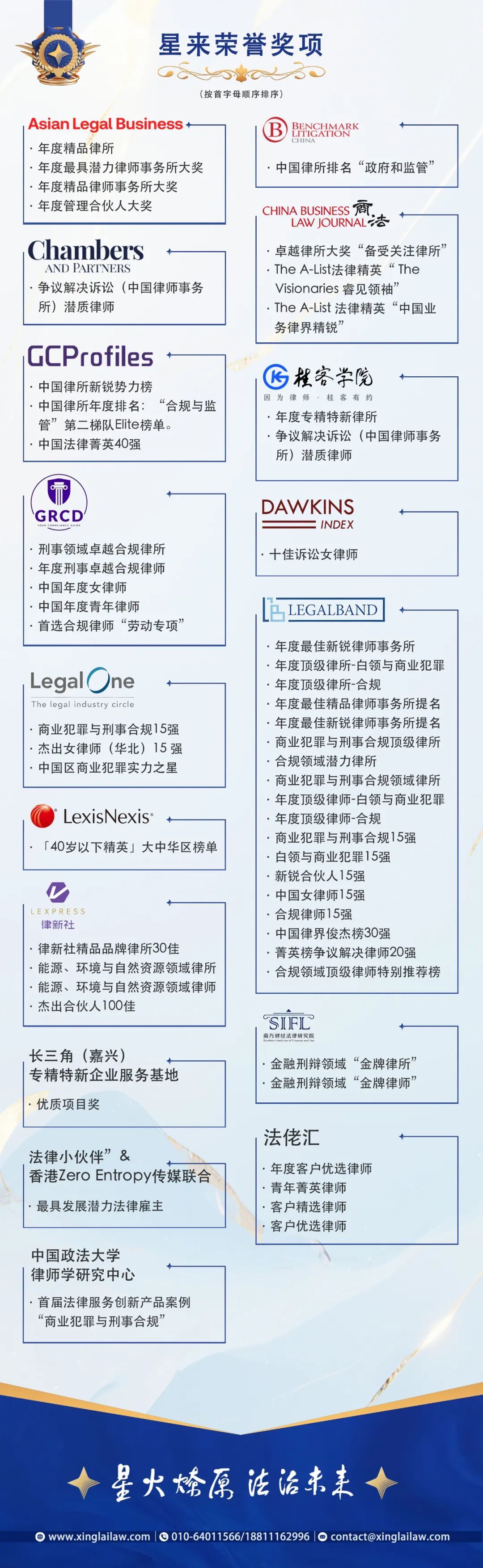
Member of the 10th Criminal Law Committee of the All China Lawyers Association; Vice Chairman of the 12th Criminal Law Committee of the Beijing Lawyers Association; Independent Director at Peking University Pharmaceutical (000788); Recognized in the 2025 LEGALBAND China Top Lawyers Ranking for White-Collar & Business Crime and Compliance; Named among the Top 15 Lawyers on the 2025 LEGALBAND China Lawyer Special Recommendation List; Selected as a Special Recommendation Lawyer in the Compliance领域 in the 2024 LEGALBAND China Top Lawyers Ranking; Also recognized as one of the Top 15 Lawyers on the 2024 LEGALBAND China Lawyer Special Recommendation List for Business Crime and Criminal Compliance; Listed as a "40 Under 40 Elite" lawyer in the Greater China region by LexisNexis in 2024; Visiting Scholar at Cornell University and the University of Chicago; Deputy Secretary-General of the Peking University Financial Alumni Association; Member of the Board of Directors of the Beijing Society of Criminology; and Member of the Board of Directors of the Beijing Association for Comparative Law, among other roles. He specializes in providing clients with comprehensive legal services that span criminal, administrative, and criminal-civil intersectional areas, particularly in handling complex and challenging cases. His extensive experience includes expertise in corporate crisis management, environmental protection, finance and securities, computer networks, and intellectual property law.
(III) Promote Substantive Review of Evidence in Administrative Regulatory Cases
Criminal cases involving heavy-metal contamination typically go through administrative oversight processes such as environmental inspections and administrative penalties. As a result, lawyers handling these cases should advocate for a thorough, substantive review of administrative regulatory evidence by criminal justice authorities—rather than allowing evidence to be automatically adopted simply because it has already undergone formal administrative scrutiny. In particular, lawyers should pay close attention to the following key aspects: 1. **Legality and Compliance of Administrative Procedures**, including whether the entities collecting evidence are properly authorized and whether they adhered to statutory powers and procedural requirements. 2. **Scientific Rigor and Reliability of Methods**, such as ensuring that sampling locations are representative, sampling techniques comply with relevant technical standards, analytical methods meet national or industry-recognized benchmarks, and that instruments are calibrated and within their valid calibration periods. 3. **Logical Consistency of Data and Sufficiency of Conclusions**, verifying whether raw data records are complete and traceable, whether calculations are accurate, and whether analysis results align seamlessly with the original data. Additionally, lawyers should assess whether conclusions are firmly grounded in robust scientific evidence and meticulous logical reasoning, while also accounting for complex factors like background levels, historical pollution trends, and contributions from multiple sources.
Lawyers must actively exercise their right to challenge evidence, demanding that the party providing the evidence fully clarify the aforementioned concerns. They should also request that expert witnesses and law enforcement officers appear in court for cross-examination. Furthermore, when administrative evidence is found—after thorough review—to involve procedural violations, methodological errors, or unreliable conclusions, lawyers must firmly advocate for the exclusion of such illegally obtained evidence or ensure it is not used as the basis for convictions in criminal cases.
References
1 See Cheng Xiao, "Forms of Causation and Liability in Multi-Person Environmental Pollution Damage," published in Journal of Jinan University (Philosophy and Social Sciences Edition), No. 2, 2014, pp. 85-94.
Introduction by the Environmental Business Team Lawyer

.
Wang Weining
Beijing Xinglai Law Firm
Deputy Director, Founding Partner
Member of the 10th Criminal Law Committee of the All China Lawyers Association; Vice Chairman of the 12th Criminal Law Committee of the Beijing Lawyers Association; Independent Director at Peking University Pharmaceutical (000788); Recognized in the 2025 LEGALBAND China Top Lawyers Ranking for White-Collar & Business Crime and Compliance; Named among the Top 15 Lawyers on the 2025 LEGALBAND China Lawyer Special Recommendation List; Selected as a Special Recommendation Lawyer in the Compliance领域 in the 2024 LEGALBAND China Top Lawyers Ranking; Also recognized as one of the Top 15 Lawyers on the 2024 LEGALBAND China Lawyer Special Recommendation List for Business Crime and Criminal Compliance; Listed as a "40 Under 40 Elite" lawyer in the Greater China region by LexisNexis in 2024; Visiting Scholar at Cornell University and the University of Chicago; Deputy Secretary-General of the Peking University Financial Alumni Association; Member of the Board of Directors of the Beijing Society of Criminology; and Member of the Board of Directors of the Beijing Association for Comparative Law, among other roles. He specializes in providing clients with comprehensive legal services that span criminal, administrative, and criminal-civil intersectional areas, particularly in handling complex and challenging cases. His extensive experience includes expertise in corporate crisis management, environmental protection, finance and securities, computer networks, and intellectual property law.

.
Su Zhongming
Beijing Xinglai Law Firm
Member of the Management Committee, Head of the Compliance Center
Master of International Law from Jilin University. As one of the first batch of corporate compliance professionals certified at the senior level, I have handled numerous compliance cases and led the development of compliance management systems for central state-owned enterprises, public institutions, and private companies. Additionally, I successfully guided the team in completing the Compliance Demonstration Zone Project in Jiaxing City. I’ve also been frequently invited to share my expertise at Renmin University of China’s School of Law, participating in the renowned "Corporate Compliance Case Study Seminar" and delivering lectures and presentations to major central state-owned enterprises and other prominent organizations.

.
Xu Rui
Beijing Xinglai Law Firm
Partner
Master of Laws from Wuhan University. Named GRCD China's Young Lawyer of the Year 2025. Specializes in commercial dispute resolution, corporate legal services, and high-stakes criminal defense, as well as corporate compliance. Possesses extensive practical experience in areas such as commercial disputes, criminal defense, corporate conflicts, and financial litigation. Has successfully represented clients in numerous cases where losses were recovered through retrial procedures and multi-level review processes.

.
Li Zeyu
Beijing Xinglai Law Firm
Advisor
Master of Economic Law from Peking University. With over ten years of experience in legal and compliance management within the investment and financing sector, specializing in private equity fund management, equity investments, antitrust law, and corporate governance compliance. I have been involved in the full-cycle legal work of numerous private equity funds and M&A restructuring projects, serving clients that include well-known private equity firms, diverse technology companies, and leading manufacturing enterprises.

.
Fan Yun
Beijing Xinglai Law Firm
Lawyer
Bachelor of Laws from China University of Political Science and Law, Master of Laws from Renmin University of China. Previously worked at a state-owned financial enterprise, gaining practical experience in areas such as civil and commercial dispute resolution, corporate internal governance, criminal defense and prosecution, and managing significant legal risks. Capable of delivering comprehensive, one-stop legal services through an integrated approach that bridges criminal, civil, and administrative law. Clients served include numerous listed companies and central enterprises.

.
Huang Xinran
Beijing Xinglai Law Firm
Lawyer
Master of Laws from Peking University. During my career, I have been involved in the criminal defense of numerous high-profile cases involving major economic and official misconduct crimes. Additionally, I have provided comprehensive and specialized compliance services to large state-owned enterprises, public institutions, and listed companies. I’ve also assisted multiple overseas construction subsidiaries of state-owned enterprises with World Bank and multilateral development bank compliance investigations, as well as sanctions relief processes. Furthermore, I’ve worked with Fortune Global 500 companies and publicly traded firms, offering support in responding to antitrust administrative penalties and implementing compliance remediation measures.

.
Ma Xueyan
Beijing Xinglai Law Firm
Lawyer
Bachelor of Laws from China University of Political Science and Law, and Master of Laws from the University of Edinburgh in the UK. My primary practice areas include civil and commercial dispute resolution, criminal defense, ongoing legal advisory services, as well as corporate legal risk management and compliance. I serve clients across a diverse range of industries, including real estate, defense manufacturing, retail, entertainment, and manufacturing.

.
Chen Yujie
Beijing Xinglai Law Firm
Lawyer
Doctor of Jurisprudence (J.D.) from the University of Sydney. Holds both Chinese legal practice qualifications and Australian New South Wales legal professional qualifications. Has previously been involved in defending numerous criminal cases involving corporations and entrepreneurs, as well as cases of official misconduct; and has provided comprehensive and specialized compliance services to several large state-owned enterprises.
Beijing Headquarters Address: No. 8 Jianguomen North Avenue, Dongcheng District, Beijing 17th Floor, East Wing, China Resources Building
Wuhan Branch Office Address: Room 1001, 10th Floor, Huangpu International Center, Jiang'an District, Wuhan City, Hubei Province

Layout: Wang Xin
Review: Management Committee
Related News
2026-01-30
CONTACT US
Contact us
Beijing Headquarters
Address: 17th Floor, China Resources Building, No. 8 Jianguomen North Avenue, Dongcheng District, Beijing
Wuhan Branch Office
Address: Room 1001, Huangpu International Center, Zhaojiatiao, Jiang'an District, Wuhan City

Follow us

Digital Star Come
Case Consultation
Experienced lawyers offer free, no-obligation consultations to provide tailored solutions.
Copyright 2025 Beijing Xinglai Law Firm