

Editor's Note:
To delve deeper into issues related to the handling of assets involved in cases under the implementation of the "Private Economy Promotion Law," and to foster a positive interaction between the healthy development of the private economy and judicial practice, the "Special Symposium on the Implementation of the Private Economy Promotion Law and the Handling of Case-Related Assets" was jointly hosted by the School of Law at Central University of Finance and Economics and the Research Center for Litigation Systems and Judicial Reform at Renmin University of China, with co-sponsorship from Beijing Xinglai Law Firm. The event took place grandly at Central University of Finance and Economics on June 15, 2025.
Professors Chen Weidong, Cheng Lei, Liu Jihua, Li Fenfei, and others from the Renmin University of China Law School; Professors Guo Hua, Li Wei, and other legal scholars from the Central University of Finance and Economics Law School; along with distinguished law professors from institutions such as China University of Political Science and Law, joined forces with experts from practical departments like the Supreme People's Court. Together, they engaged in an in-depth discussion centered on key topics including corporate operational autonomy, corporate property rights, corporate digital assets, and the handling of assets involved in legal cases.
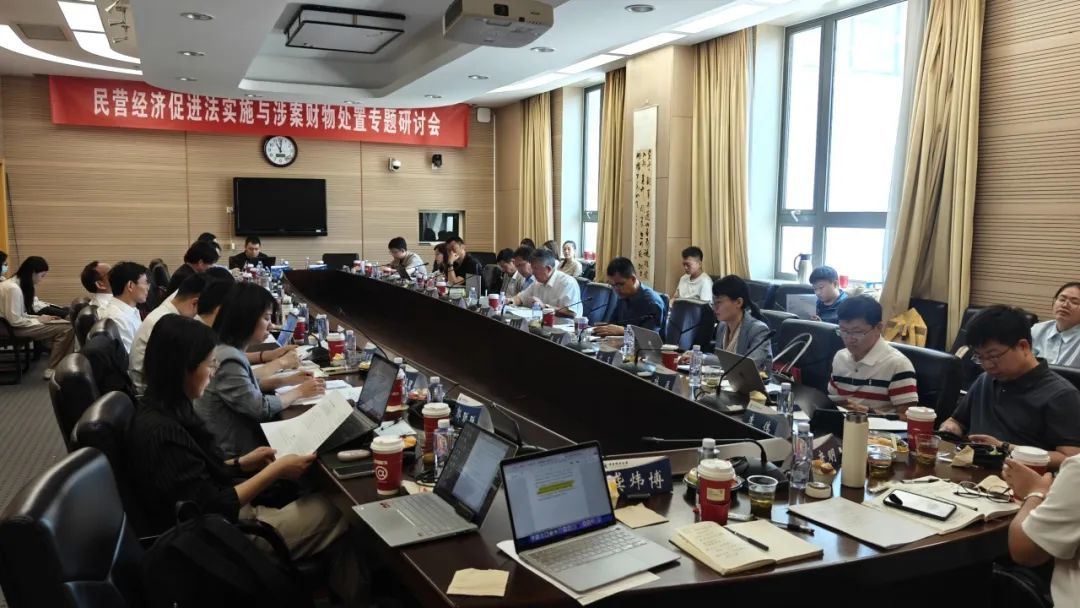
At the meeting, Wang Jun, Director of Beijing Xinglai Law Firm and a lawyer, drew on her practical experience in handling corporate-related cases to deeply analyze three key issues associated with the disposal of assets involved in legal proceedings—and proposed corresponding solutions. The seizure and freezing of legitimate property should be strictly limited within the recovery process. Additionally, channels must be established to allow the exchange of seized or frozen assets for other properties of equivalent value. Moreover, the misuse of fines as a pretext to confiscate lawful assets needs to be regulated during judicial proceedings.

Wang Jun, Director of Beijing Xinglai Law Firm
In the current era of thriving private-sector development, the issue of handling assets involved in legal cases is gradually coming into sharp focus. This issue is not only closely tied to the legitimate rights and interests of private enterprises but also has a significant, often overlooked impact on the overall healthy growth of the private economy.
I. The Dilemma and Way Forward: Legal Property Illegally Seized, Frozen, and "Supported by Evidence"
The "Opinions on Several Issues Concerning the Handling of Property in Criminal Cases Involving Black and Evil Forces," the "Anti-Organized Crime Law," and the "Implementation Regulations of the Supervision Law," jointly issued by the Supreme People's Court, the Supreme People's Procuratorate, the Ministry of Public Security, and the Ministry of Justice, clearly stipulate that when property subject to lawful confiscation or recovery cannot be located or has been lost, other assets of equivalent value may instead be seized or confiscated. This brings us to the concept of "other assets of equivalent value." Both from a literal interpretation and based on contextual analysis of these legal provisions, it becomes evident that "other assets of equivalent value" refer specifically to legitimate, lawful property—precisely the root cause behind the widespread overreach in asset seizures, freezes, and attachments currently observed during the investigation phase of many cases.
However, the investigating authorities may have overlooked that the appropriate time to handle "other assets of equivalent value," according to the above-mentioned regulations, is during the recovery and confiscation procedures—specifically, at the enforcement stage. Consequently, the widespread practice of seizing or freezing legitimate property during the public security investigation phase actually lacks legal basis and seriously contravenes provisions outlined in the current Criminal Procedure Law, as well as the Regulations on Procedures for Public Security Organs in Handling Criminal Cases.
Some have argued that, since the future can be treated as enforceable property, failing to implement asset seizure and freezing measures during the early stages of public security investigations could ultimately make it impossible to recover those assets later on. However, any coercive actions taken by state authorities against businesses or citizens must be strictly grounded in law—and under no circumstances should the procedures for seizing, freezing, and recovering assets be confused with those used for confiscation.
While the above-mentioned cases involving official misconduct and organized crime can arguably be said to "have a legal basis," current practices have already extended beyond these specific categories, with instances emerging even in ordinary cases where legitimate assets are seized or frozen during the investigation phase. This is something we must remain highly vigilant about and firmly challenge.
2. Channels can be established to exchange seized or frozen assets for other equivalent properties.
In civil cases, the concept of property preservation liability insurance exists—both during the trial phase and the enforcement stage. If a party provides property as security or purchases property preservation liability insurance, guaranteeing that the preserved assets will not be transferred and ensuring there is adequate compensation available, the court may then lift the seizure or freeze on those assets. This measure helps mitigate the adverse effects of asset seizures or freezes on the parties involved.
In addition, some local courts have begun gradually supporting the practice of "exchanging" seized or frozen assets for other assets of equal value—either to protect the business rights of parties involved or enterprises, or to help alleviate operational and production challenges. For instance, the Jiangsu Provincial High People's Court’s *Guidelines on Further Standardizing the Seizure, Detention, and Freezing of Assets*, its *Guiding Opinions on Strengthening the Implementation of Law-Based, Fair, Benevolent, and Civilized Enforcement Practices to Further Optimize the Business Environment*, and the Foshan Intermediate People's Court’s *Trial Guidelines on Standardizing Property Preservation Measures to Support the Optimization of the Business Environment* all explicitly endorse this approach. However, such a mechanism remains absent in criminal cases.
Against the backdrop of the official implementation of the "Private Economy Promotion Law," we can fully explore and actively pursue this approach in criminal cases.
I once attempted to "exchange" the seized and frozen assets in a foreign-related, classified criminal case for other property of equivalent value. The judge was even nearly persuaded—but ultimately, due to the case’s unique nature as both foreign-related and classified, the request was denied after being reported and approved at higher levels. Still, at least the judge wavered, which means this approach at least deserves a try.
III. The widespread practice of confiscating legitimate property under the guise of fines must be regulated within the judicial process.
The Criminal Law contains varying provisions regarding fines: some articles are relatively clear—for instance, the crime of illegally establishing financial institutions carries fines of differing magnitudes depending on the specific statutory penalty tier—but others are more general. For example, in cases of serious or particularly severe illegal business operations, the fine is set at between one and five times the amount involved; meanwhile, for the crime of accepting bribes, the law mandates a mandatory fine without differentiating fine ranges based on the corresponding statutory penalty levels.
In practice, there have been instances where legitimate property was confiscated under the guise of fines. For example, in one case, assets worth 5 million yuan were seized beyond the legally permitted scope. However, instead of returning this excess amount to the parties involved as required by law, the court’s ruling directly classified the entire 5 million yuan as a fine and ordered its confiscation. While the law does not impose an explicit upper limit on fines, this approach clearly contradicts both unwritten judicial practices and established precedents, causing significant harm to the parties’ lawful property rights. Therefore, future legislative reforms should carefully consider refining and clarifying the rules governing fines to ensure they align with both legal principles and equitable treatment of individuals.
The handling of assets involved in cases related to the private economy is critical not only to the survival and growth of private enterprises but also to the development of a society governed by the rule of law. These three issues highlight the pressing pain points and challenges encountered in practice. Addressing them creatively will require joint reflection and concerted efforts from both the legal academic community and judicial practitioners! As the "Private Economy Promotion Law" is vigorously implemented, we are confident that by refining innovative approaches, enhancing judicial oversight, and other measures, we can effectively ensure the legality, reasonableness, and fairness of asset disposal processes involving private enterprises, thereby fostering a robust legal environment conducive to their healthy development.
About the Author

.
Wang Jun
Director of Beijing Xinglai Law Firm
Founding Partner
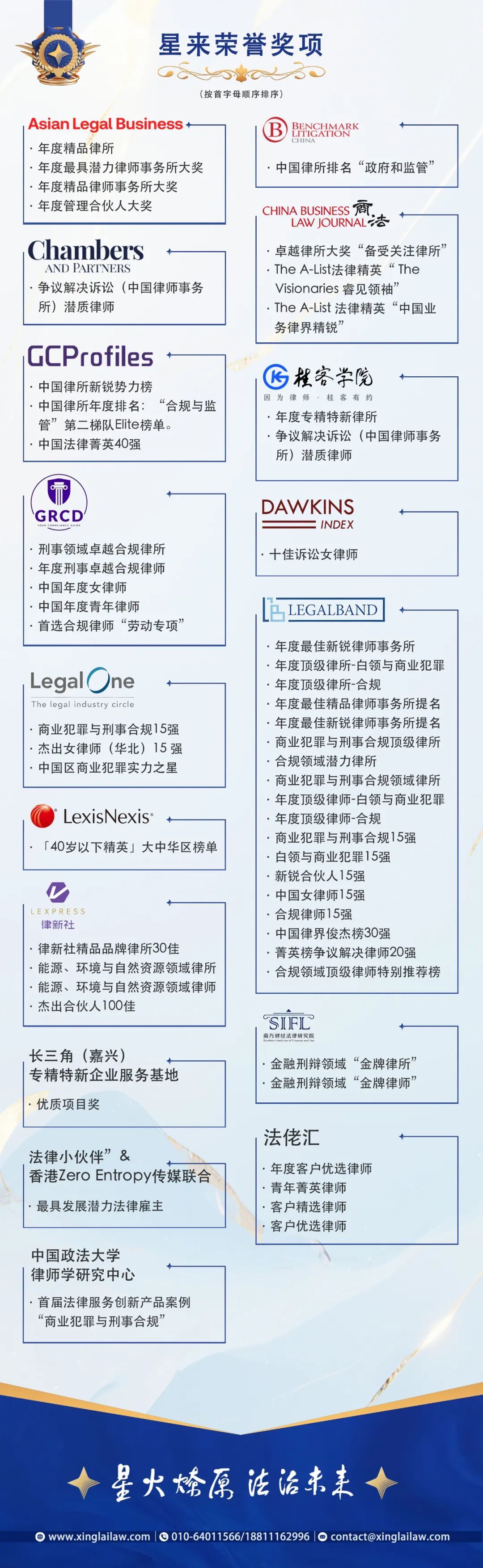
Awarded "Gold Medal Lawyer" in the Criminal Defense field at the 21st Century Southern Finance & Law Research Institute's Top Lawyer Selection.
I have successfully handled numerous criminal cases involving acquittals, with extensive practical experience in handling complex criminal-civil crossover cases and defending against property-related penalties. I specialize in representing clients accused of official misconduct, economic crimes, and cybercrimes, particularly excelling in the examination and analysis of electronic data—areas where I’ve cultivated deep, hands-on expertise.
Honorary Awards:
Fiscal Year 2025
Shortlisted for the ALB Legal Awards' "NARA Annual Managing Partner Award"
LEGALBAND Client Choice: Top 15 Female Lawyers in China
Top 40 GCP China Legal Leaders
GRCD China's Annual Female Lawyer
2024 Fiscal Year
Law Times Annual Power List: "100 Outstanding Partners Highly Recommended for 2024"
China Business Law Journal's "The A-List Legal Elite" award has once again recognized us as "The Visionaries," showcasing our visionary leadership in the legal community.
Guike Annual Conference "Management Partner of the Year" Award.
LexisNexis 2024 "40 Under 40" Greater China List
LEGALBAND Clients' Choice: "Top 15 Rising Partner List"
2023 Fiscal Year
China Business Law Journal's "The A-List Legal Elite" award has selected me as "The Visionaries," a visionary leader.
The 8th Guike Annual Conference "Fresh Perspectives: Most Promising Growth Award"
2021 Fiscal Year
Awarded "Gold Medal Lawyer" in the Criminal Defense领域 at the 21st Century Southern Finance & Law Research Institute's Top Lawyer Selection.
Beijing Headquarters Address: No. 8 Jianguomen North Avenue, Dongcheng District, Beijing 17th Floor, East Wing, China Resources Building
Wuhan Branch Office Address: Room 1001, 10th Floor, Huangpu International Center, Jiang'an District, Wuhan City, Hubei Province

Edited and Layouted by: Wang Xin
Review: Management Committee
Related News
2026-01-30
CONTACT US
Contact us
Beijing Headquarters
Address: 17th Floor, China Resources Building, No. 8 Jianguomen North Avenue, Dongcheng District, Beijing
Wuhan Branch Office
Address: Room 1001, Huangpu International Center, Zhaojiatiao, Jiang'an District, Wuhan City

Follow us

Digital Star Come
Case Consultation
Experienced lawyers offer free, no-obligation consultations to provide tailored solutions.
Copyright 2025 Beijing Xinglai Law Firm